Really? With all of everything going on, you’re going to talk about…weather? Absolutely—and not just because Brits love to talk about the weather and we’re expecting a big storm here this evening. (Although “weather” in the States is a whole different level of stuff that is just fascinating to talk about.) Rather, what this administration is unleashing on the national weather service is an illustration of what happens when ideology runs rampant at the expense of science—hell, at the expense of common sense—with likely catastrophic results.
The ‘everything’s bigger in America’ trope gets overused but when it comes to the weather, it’s true. There’s the Atlantic Hurricane Season, which runs from June 1 through the end of November. And Tornado Alley, which basically covers the entire center of the country (being in a high rise hotel in Chicago late at night and suddenly the tornado sirens go off is something I hope never to experience again). There are wildfires, especially but not solely in the west; periodic atmospheric rivers which, along with the hurricanes, can lead to epic floods; and let’s not forget the occasional earthquakes. And for the floods and fires, an increasing number of “once in a century” events that seem to hit more and more often.
Case in point, the massive storm that churned across the country over the weekend of March 14-16.

This monster left a trail of destruction across multiple states, spawning category EF-4 tornadoes (the second strongest class), and killing scores of people, including eight who died in a big car pileup on a major highway in Kansas after a dust storm hit. Turning on the radio to catch a news story about a deadly dust storm in Kansas was a level of apocalyptic “I’m sorry WHAT now?” that I did not expect to hear on a Saturday morning.
The role of the NOAA and NWS

Obviously climate change is exacerbating all of this, which makes it even more important to use cutting-edge science to build sophisticated weather modeling, monitor developing problems, and predict where disaster may strike. Way back in 1870, Congress established a division within the US Army’s Signal Service tasked with issuing weather forecasts and warnings. It eventually became a civilian agency when Congress transferred its meteorological responsibilities to the US Weather Bureau. Today, it’s the National Weather Service (NWS), housed at the National Oceanic and Atmospheric Administration (NOAA) under the Department of Commerce.
Note that NOAA tag line: “Science. Service. Stewardship.” This administration does not believe in any of that.
The NWS is owned by the American people, a public service that is paid for with our tax dollars. Yes, it provides the data that feeds into the nifty weather app on our phones but, like so many publicly funded services, it does way more than most of us realize.

First, there’s the safety aspect. Across the country, airports rely on the NWS for reliable and updated storm forecasts. (Personally, I’d really like the airport to have accurate information on any massive storms lurking between me and my destination.) In mid-March, when wildfires broke out across Texas, life-saving evacuation alerts were issued by the NWS, while firefighters on the ground were using NOAA satellites for real time wildfire monitoring. In 2024, according to a Union of Concerned Scientists article published March 21 (https://blog.ucs.org/juan-declet-barreto/the-theft-harm-and-presidential-grift-of-privatizing-the-national-weather-service/) 418 people were rescued from incidents over water, land, and in downed aircraft, thanks to the Coast Guard and the military having access to NOAA’s search and rescue-aided satellites.
Then there are the widespread commercial uses for accurate weather data. Farmers rely on NOAA info for drought monitoring, so they can plan and prepare for the season. Forest managers and wildfire first responders rely on seasonal and monthly wildfire risk outlooks. Major manufacturers and infrastructure managers need weather-related risk data to keep things running smoothly. That includes getting information on rapid-onset events such as extreme heat domes and flooding.
But like every other part of public services, the Trump administration has unleashed the DOGE wrecking ball on the NOAA, telling the Agency it plans to cut their workforce by 50%. The whole of the NOAA workforce currently stands at about 13,000—that’s less than one half of one percent of the three million-strong federal workforce. In early March, hundreds of workers were fired from the NWS. The Union of Concerned Scientists have accused DOGE of “illegally invading NOAA headquarters, firing thousands of its staff, and canceling leases on some of its key buildings.”
The impacts of all this are already being felt. One of the things the NWS does is launch weather balloons, a critical tool in gathering data. Apparently there are 83 balloon launch sites across the US, and according to one report, 14 are already doing only partial launches, or none at all. This weather data gives critical information to local governments, like tornado warnings, and to major installations like oil rigs, who like to know when there’s a hurricane headed their way.

(Screenshot from a Bluesky account)
Hurricane season starts on June 1 and the NWS has already warned it will be a “dynamic” season this year. In February, a slew of flight directors and other pilots were fired from the NOAA; news media suggests some have since been rehired, but no one seems to know if there will actually be planes, pilots, or plans ready to go when the first big storm of the year threatens one of the cities along the Atlantic or Gulf Coast.
But fear not—Elon Musk owns a satellite company. Starlink will just step in and save us all, right? Actually, I’m pretty sure my tax dollars are a more efficient way to fund weather balloons than relying on a patchwork of private companies that will doubtless charge heavily for their precious data.
The Role of FEMA

In a country this big, you need large resources to cope with the aftermath of weather-related disasters. Enter FEMA, the Federal Emergency Management Agency.
But Trump has for months been saying he wants to get rid of FEMA, calling it an inefficient use of federal money. He’s already fired more than 200 employees at FEMA and recently signed yet another executive order, this one directing state and local governments to “play a more active and significant role” in preparing for disasters.
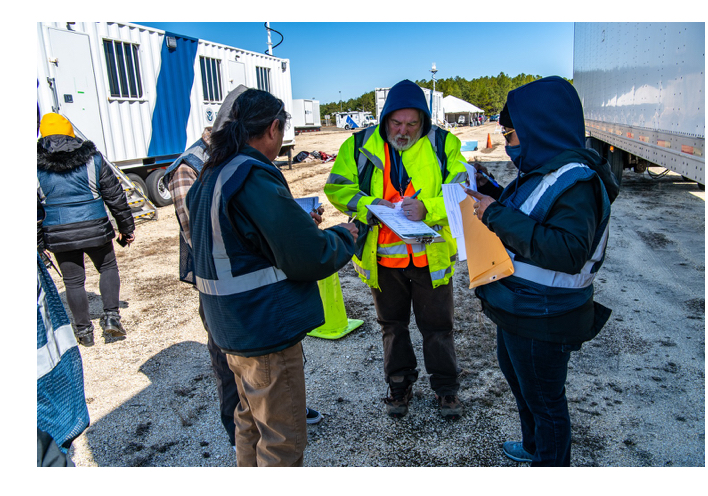
In truth, state and local governments are already in charge of disaster response. Only when a state government asks does FEMA step in, organizing thousands of federal workers to help with things like inspecting damage, distributing aid, planning for rebuilding public infrastructure, etc. It can also call on resources from the Department of Defense and the U.S. Army Corps of Engineers, like helicopters and planes and ships.
FEMA gives funding to local governments to rebuild public infrastructure after disasters, including schools, roads, bridges, and parks. It also gets aid to individuals for things like temporary housing and home repairs. And there are FEMA grants available to help communities be better prepared for disaster, for example building infrastructure that is less likely to be destroyed by floods or fires or tornadoes. The Agency is far from perfect and has been the subject of plenty of criticism over the years. But the reality is that without FEMA, it would be up to the states to find the resources to deal with all of this, including finding and training staff.
(Image from the FEMA website)
FEMA reportedly is responding to three to four times more disasters now that it did in the 1980s.
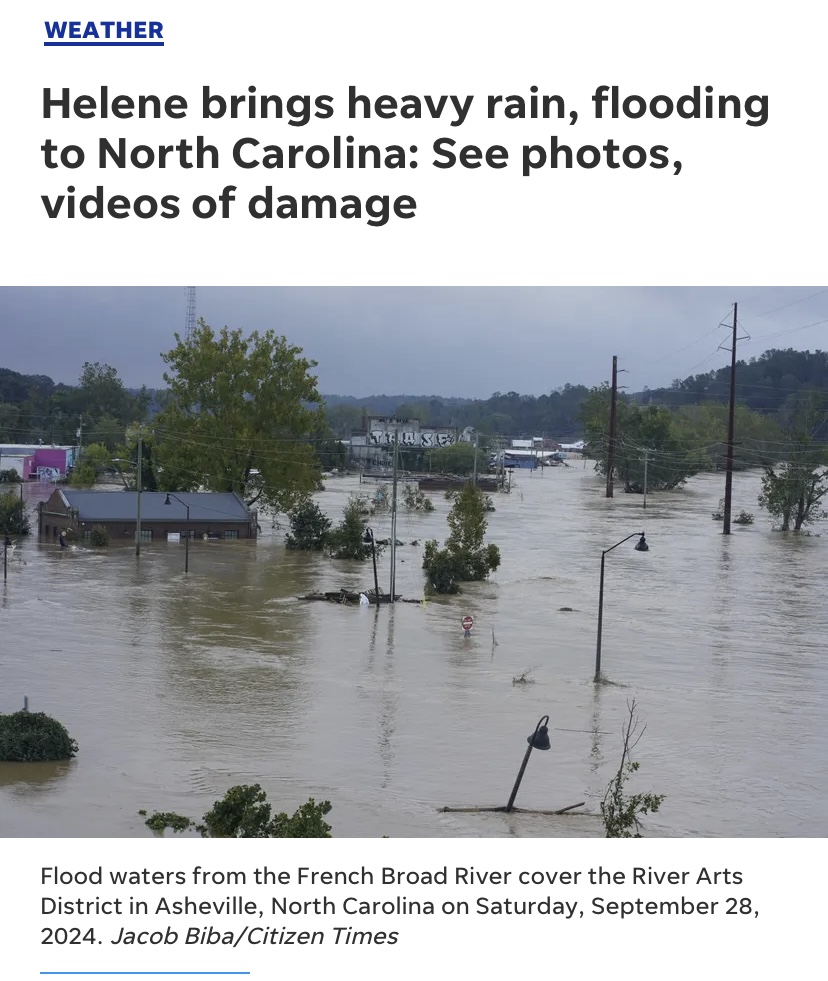
Last September the massive Hurricane Helene made landfall in northern Florida, then pounded its way inland, bringing once-in-a-century levels of rainfall that in turn triggered catastrophic flooding in places such as the Black Mountains of western North Carolina, a region that had not seen hurricane-spawned floods in living memory. Recovery and rebuilding will take years. But a few weeks ago, I saw a news report (from MSNBC) that the Trump administration has denied a funding request from the city of Asheville, North Carolina, to help its recovery from Helene—because in the city’s 125-page funding plan there is one line lauding the positive impact the plan can have for women- and minority-owned businesses.
(Picture from USA Today)
Meanwhile, Los Angeles is trying to recover from January’s massive wildfires. Firefighters came from all over the country to help—and also from Mexico and Canada. Can’t imagine they’ll be as willing to do that going forward. One of the decimated communities in LA is called Altadena. Imagine the linguistic hoops that local disaster recovery people are having to navigate, to claim federal rebuilding assistance without mentioning that this is an historically Black community.

So, what could Trump and DOGE possibly have against federally funded weather forecasts and disaster recovery? Yes, these spending cuts are part of the administration’s obsession with doing everything at the state level. But more to the point, the attack on the NOAA is yet another plank in the Project 2025 goal of clawing up the bulk of publicly owned resources into private hands. It’s the corporatization of the public good, and that leaves all of us vulnerable.


 Abroad in the USA